
Milk Cooling Tank - Direct Glycol Cooling Models (DIB)
Operation
The “DIB” method (Direct Ice Bank) or otherwise known as the glycol cooling tank operates under the same principle as the DX system. The exception instead of using refrigerant gas which passes through the cooling plates (evaporator), a glycol / water mixture is circulated via water pumps instead. This glycol mixture is pre-cooled firstly using a refrigeration unit before entering the evaporator, thus this type of cooling method is known as secondary refrigeration cooling.
The horizontal construction is space saving and the efficient evaporator ensures quick trouble free milk cooling, coupled with the agitator the milk is evenly stirred ensuring optimal heat exchange and prevention of freezing.The agitator doubles to expedite the efficient cleaning via the rotojet cleaning powerball. All internal surfaces are smooth and thus are no bacteria traps.
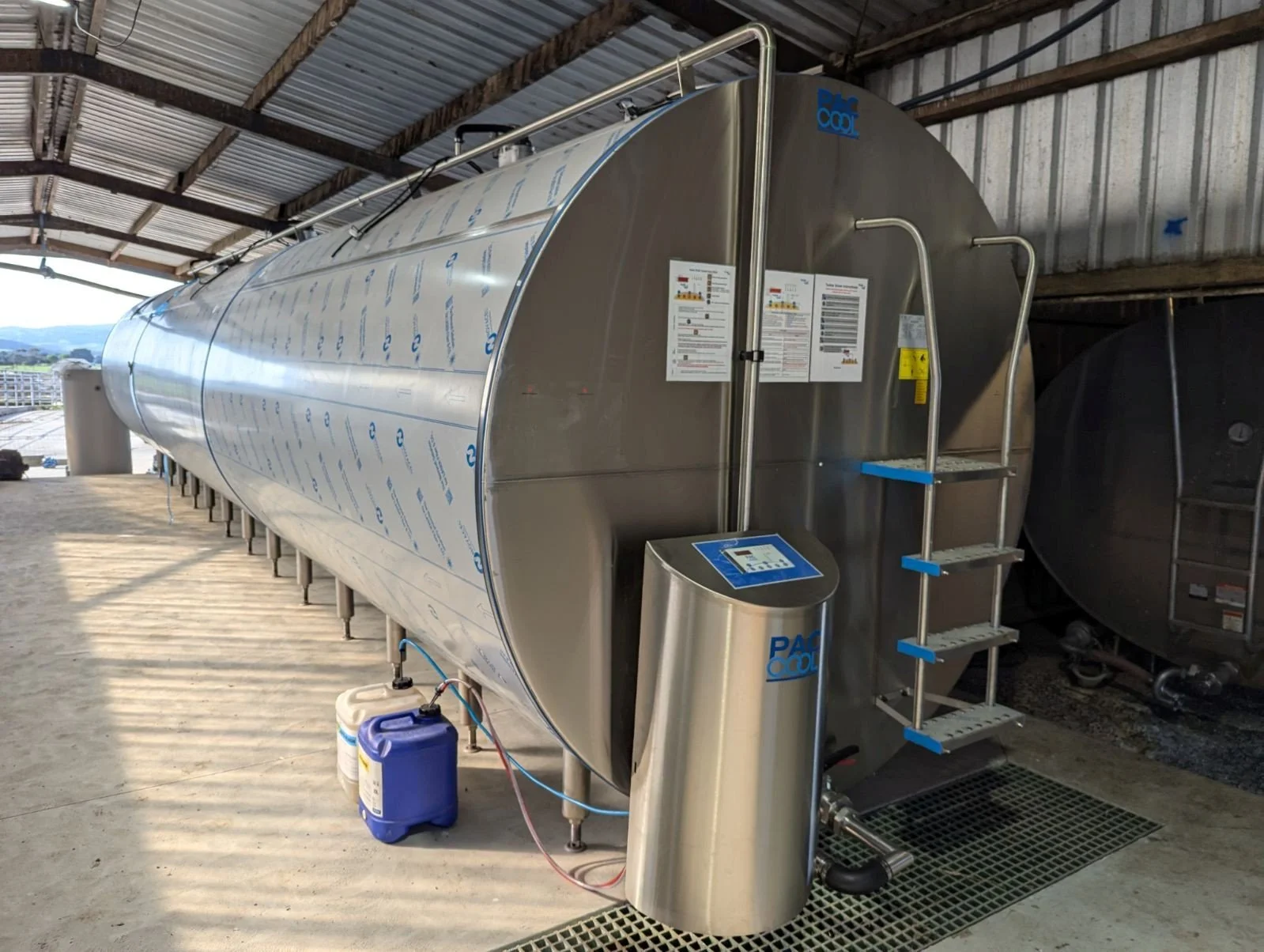
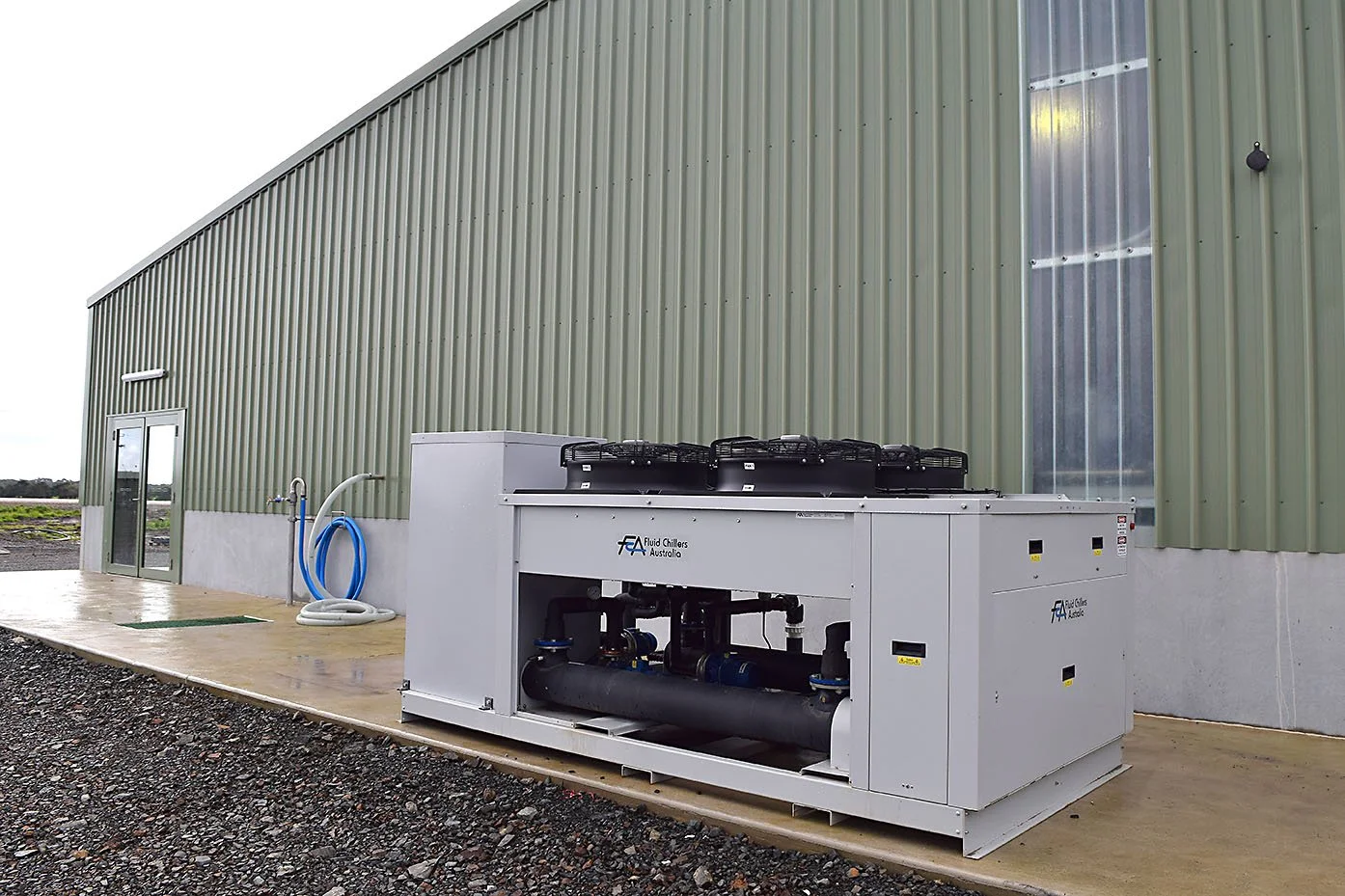
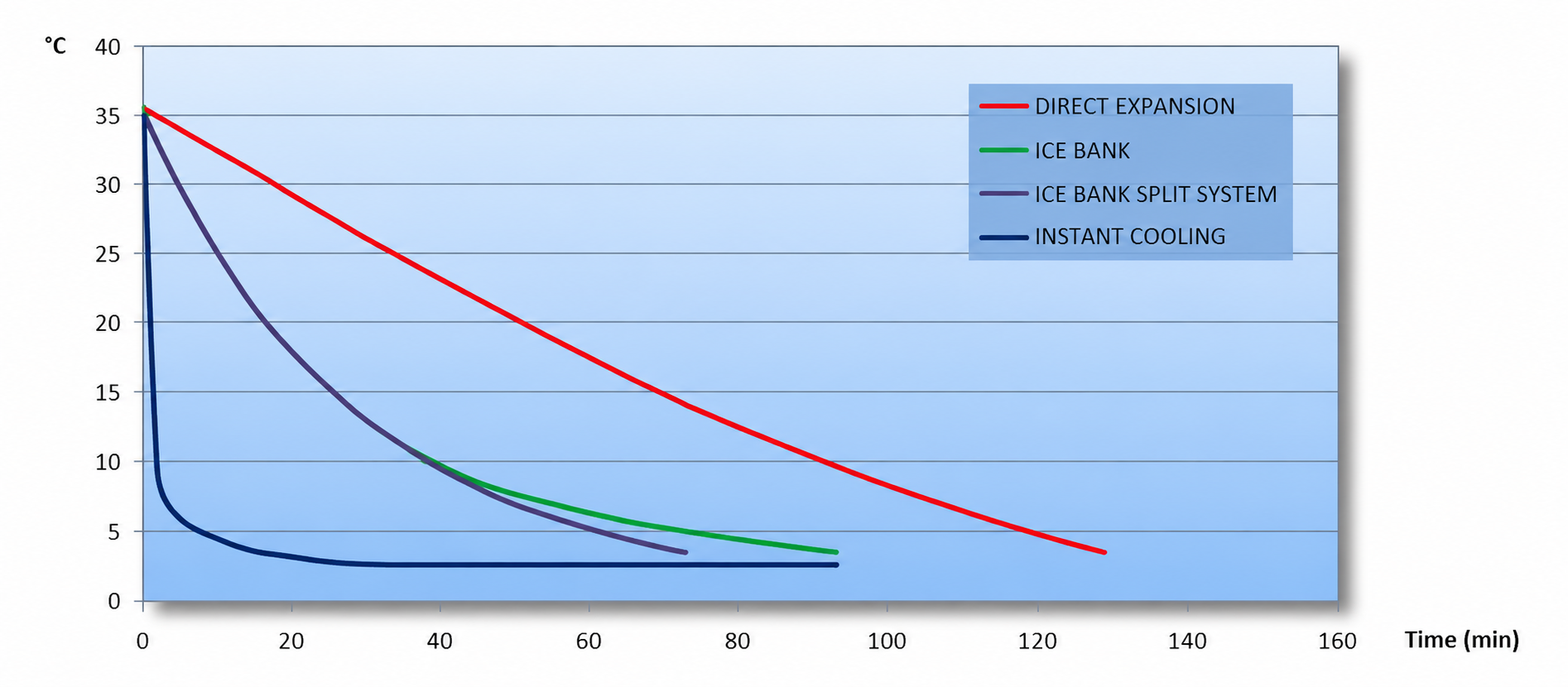
What is a “Glycol Cooling” (DIB) Pac Cool milk tank?
A Glycol cooling tank other wise known as a “DIB” model works under the same principle as a direct expansion (DX) system. The cooling plates which normally carry the refrigerant gas on a DX system instead are used to carry a water / glycol mixture. The water / glycol mixture is firstly pre-cooled down to a super low temperature using a refrigeration compressor or a dedicated on call chiller system. A small storage vessel that is insulated holds the cooled water / glycol mixture until it is required, upon call water pumps circulate the mixture through the cooling plates (evaporator) which removes heat from the milk. The warm water / glycol returns back to the chiller unit for instantaneous refrigeration and holding again in the glycol storage vessel. This form of cooling is known as secondary refrigeration, a refrigeration compressor is still used but instead cools the glycol which again is used to cool the milk.
Uses for “Glycol Cooling” (DIB) Pac Cool milk tanks
The DIB / Glycol system is ideal for the large volume milk producer or the intermediate producer requiring the advantages of DIB cooling.
Unlike direct expansion (DX) systems, glycol on call chiller compressors are sized for milk flow from the platform instead of milk tank volume like the DX system. This means that the maximum flow rate of incoming milk is what the system can cool and is capable of achieving.
In most cases a secondary plate cooler or heat exchanger is fitted in line after the first ground water plate cooler. Milk enters the secondary plate cooler which also has the glycol mixture passing through the plates, dependant on size of chiller selected, the incoming milk can be reduced in temperature and can enter the tank at 4 degrees.
The evaporators of the milk cooling tank use the glycol mixture via another pump to maintain milk temperature or to further reduce temperature to the 4 degree cut off in warmer months. The secondary plate cooler is not required but is the most effective and efficient means when coupled with a DIB milk cooling tank using an on call glycol chiller compressor.
The ultimate advantage is that milk can enter the tank already cold and at set point temperatures. The quality of the milk is at first class levels with minimum bacteria. The other advantage is that be it one drop of milk or a whole tank full, milk is cooled without issues of freezing or over running of the compressors. Thus this system is perfect for large volume milk producers.
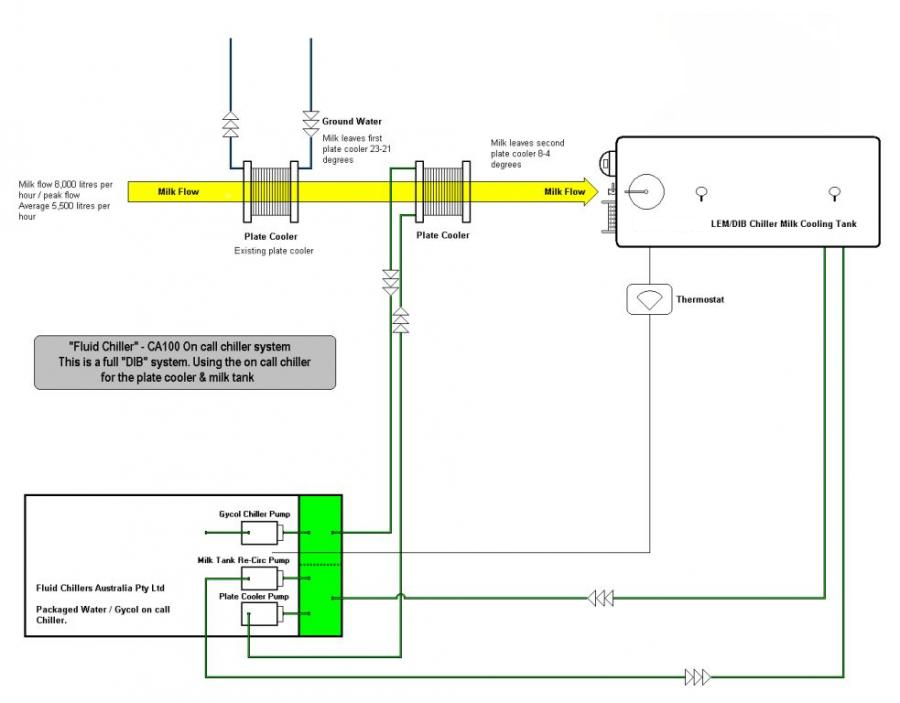
How the system works
