Ice Water Cooling
(PIB Ice Banks)
PIB Ice Banks provide an efficient and reliable ice water cooling solution designed for rapid milk cooling and consistent temperature control. By storing cooling energy as ice and circulating chilled water when required, the system delivers high cooling capacity during peak demand while helping dairy operations manage energy use efficiently.
PIB Ice Banks are a proven solution for farms requiring dependable, high-performance milk cooling, particularly where fast cooling and reliable operation are essential.
What is an Ice Builder?
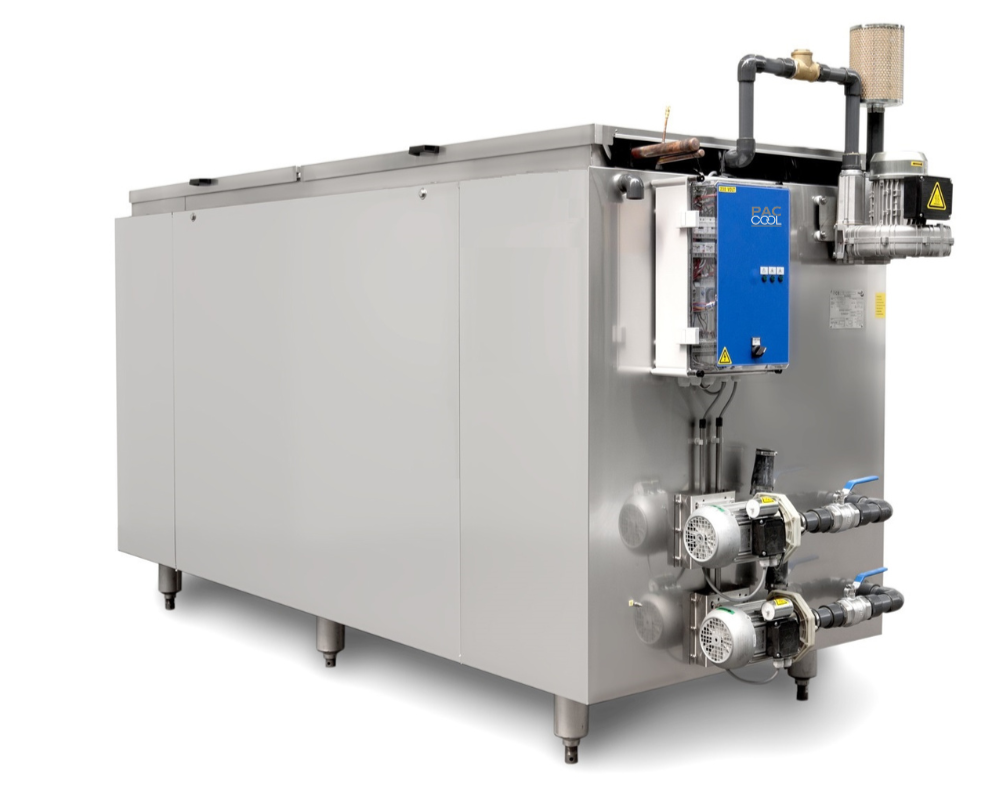
The PacCool Ice Builder is an ice water cooling and thermal energy storage system designed for dairy operations. It produces and stores ice, which is then used to deliver a large volume of ice water at approximately 0.5°C for rapid milk cooling.
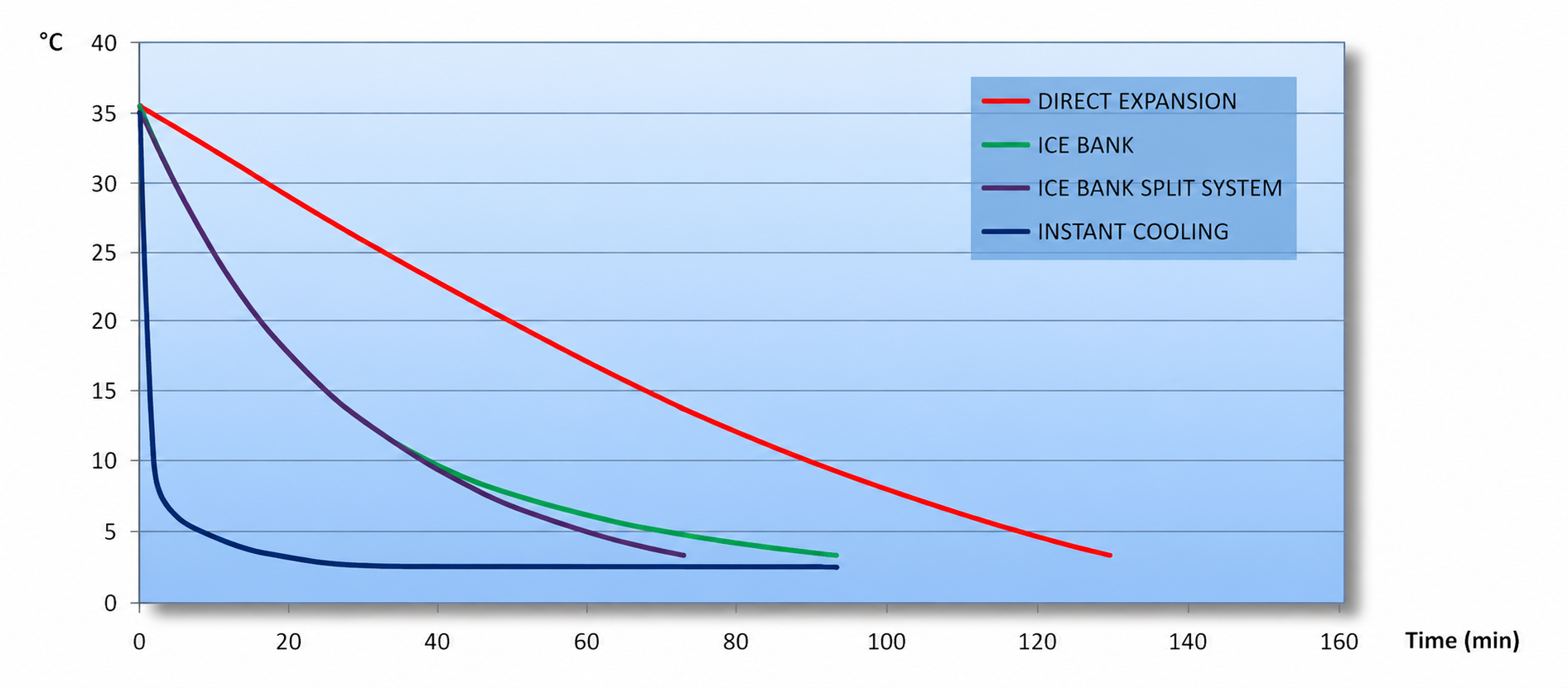
By cooling milk quickly, the system can reduce cooling time by up to 50%, helping preserve milk quality while improving the way energy is used on-farm. The system is suitable for both large and small milk volumes, including robotic milking applications.
How Does It Operate?
Rather than relying solely on refrigeration at the exact time milk needs to be cooled, the Ice Builder creates and stores cooling capacity in the form of ice.
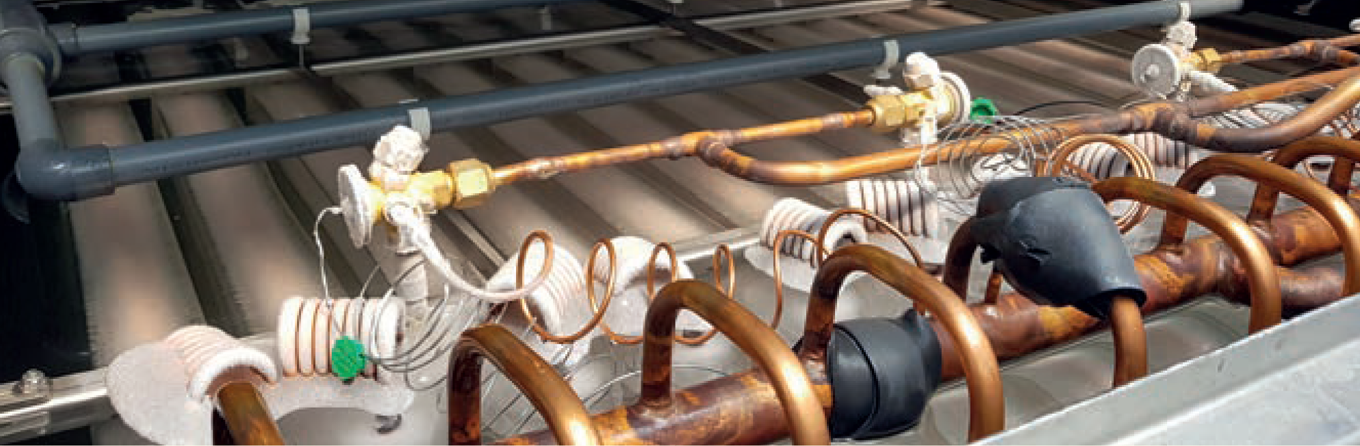
A copper evaporator and smart ice production system create consistent ice levels within the unit. When cooling is required, an air blower assists with fast, even melting, producing a steady supply of ice water at approximately 0.5°C.
This chilled water can be used to rapidly pre-cool milk before it enters the milk tank, reducing the load placed on the milk vat refrigeration system.
Ice Water – A Thermal Battery
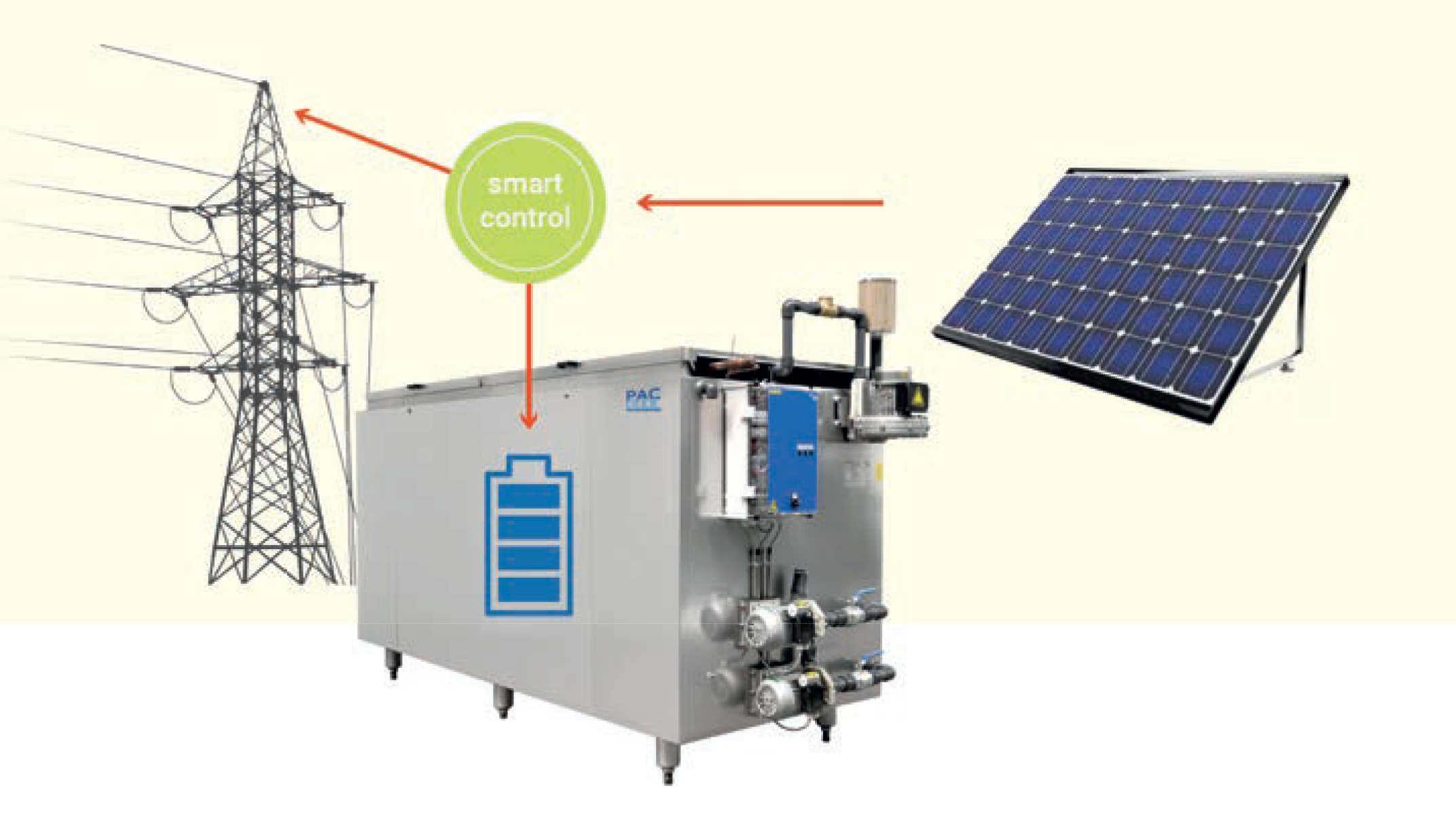
One of the biggest advantages of an Ice Builder is its ability to effectively operate as a thermal battery.
Instead of storing electricity in a conventional battery, electrical energy is used to create ice. That stored cooling energy can then be used later when the milk needs to be cooled.
The system allows a large amount of cooling energy to be stored within a relatively small footprint and used when required.
Ideal for Solar Power
This is where the Ice Builder can become particularly valuable for modern dairy farms with solar.
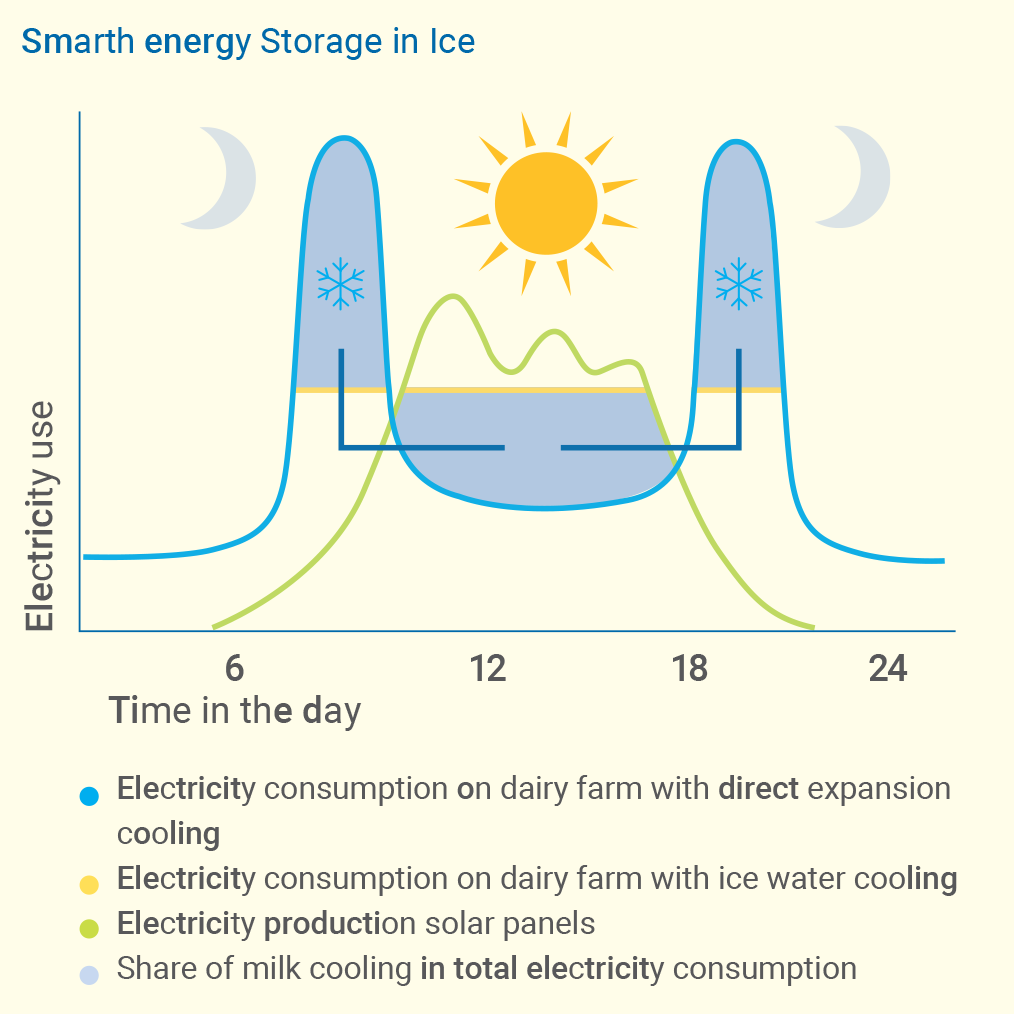
The system can be programmed to produce ice during periods of high solar generation, effectively converting excess daytime solar electricity into stored cooling capacity.
That ice can then be used for milk cooling later in the day, including when solar generation has reduced or stopped. This can help farms:
Increase the amount of self-generated solar electricity consumed on-site
Reduce reliance on grid electricity during peak periods
Shift refrigeration demand away from expensive electricity periods
Make better use of surplus solar generation rather than exporting it
Spread electrical demand across the day and potentially reduce the need for costly grid upgrades
Key Benefits
Rapid Milk Cooling
Ice water at approximately 0.5°C provides fast, effective milk cooling and can reduce cooling times by up to 50%.
Store Cooling Energy
Produce ice when electricity is cheapest or most readily available and use that stored cooling capacity later.
Make Better Use of Solar
Turn surplus daytime solar generation into stored cooling energy for use during milking.
Reduce Peak Energy Demand
Move refrigeration load away from peak electricity periods and spread energy consumption more effectively.
Protect Milk Quality
Rapid cooling helps reduce bacterial growth while maintaining milk quality.
Flexible Dairy Applications
Suitable for both large and small milk volumes and compatible with applications such as robotic milking.
Wide Capacity Range
PacCool Ice Builders are available across a broad range of capacities, from 8 to 370 kWh, allowing systems to be matched to different dairy operations.